
Vivomer

Shellworks is a London-based materials company that produces Vivomer, a bio-based and home-compostable polymer. Designed to replace conventional plastic in the packaging sector, Vivomer is created by microorganisms feeding on waste. It looks and performs like standard plastic during its usable life but completely safely biodegrades in soil or water once discarded.
Intrinsic Earth is not responsible for content held on external websites.
Vivomer
What if the packaging on your vegetables (as unnecessary as it is!) could dissolve into the soil, just like leaves from a tree? What if every shampoo bottle, foods container, and dropper you used, left nothing behind? No microplastics, no toxic chemicals - nothing of the sort! This is what Shellworks are making possible, through their breakthrough material, Vivomer.
Shellworks is a London-based materials company founded in 2019 by Amir Afshar and Insiya Jafferjee, who met through the Royal College of Art and Imperial College London. Their flagship innovation, Vivomer, is a bio-based polymer designed to replace conventional plastic in packaging. It's a prime example of a symbiotic business: one that delivers not just economic value, but also ecological and social.

Image alt text: Image of Vivomer shellworks founders in their lab developing Vivomer
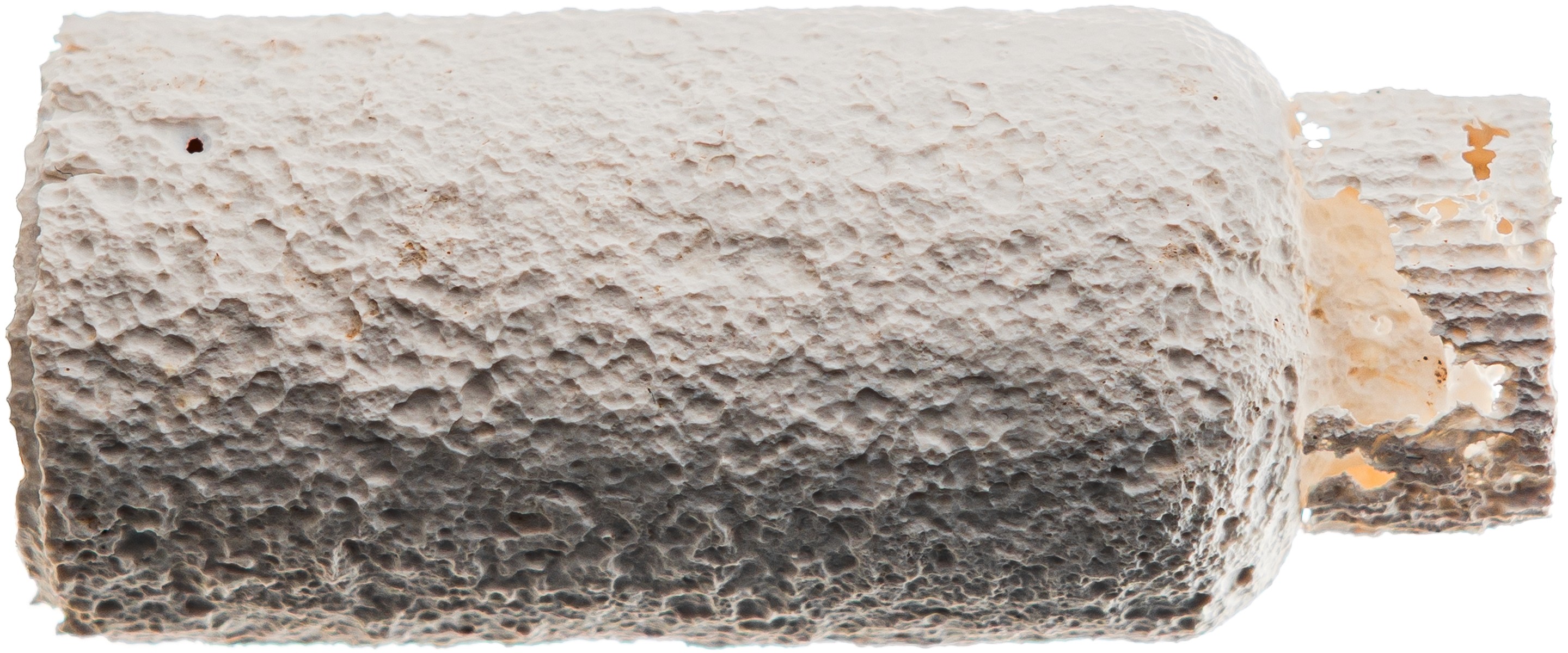
Image alt text: White Vivomer dropper and cap shown partially composted in garden soil showcasing complete biodegradation with no microplastics.
What is Vivomer?
Vivomer is a type of Polyhydroxyalkanoate (PHA) - a natural polymer which is produced inside living microorganisms. It’s similar to fat – bacteria produce it when they feed on carbon-rich waste materials, such as cooking oil. Shellworks take advantage of this biological process and scale it up: microorganisms are fed second-generation waste feedstocks, which they ferment, producing polymer chains inside of their cells. These polymers are then extracted, formulated, and pressed into pellets ready for standard manufacturing equipment - ready to replace plastics.
The result looks and behaves exactly like plastic. It's dishwasher-safe, shower-safe, and stable on retail shelves for over three years. But the second it's no longer needed, unlike plastic, microorganisms in soil, water, or a home compost heap can use it as food.
Vivomer is "made to last, designed to disappear." It behaves just like plastic for as long as you need it – then completely biodegrades once you're done. -Shellworks
What makes Vivomer symbiotic?
A symbiotic business, as described in Frank Birkin’s Symbiotic Businesses, is a business that has ecological and social benefits, as well as economic ones.
|
8 million+ |
240 tonnes |
52 weeks |
|
Products replaced |
Plastics diverted |
Full biodegradation |
Ecologically, Vivomer tackles one of the most damaging aspects of our global economy – disposable plastic packaging. In 2025 alone, globally, we generated 225 million tonnes of plastic waste. Packaging accounts for 33% of all plastic produced. Only 9% of plastic waste is recycled – with the rest going to landfill, incineration, or into our natural environment. Vivomer fixes this issue - Vivomer is certified OK Compost HOME by TÜV Austria and has been tested against EN 13432 (industrial compostability) and ASTM D6691 (marine biodegradability) standards.
Socially, Vivomer eliminates toxic additives that conventional products introduce into our products and bodies. It doesn’t contain BPAs, PFAS, no phthalates, and zero microplastics. Shellworks tests for these using parts per billion detection levels, rather than parts per million – a thousand times more rigorous than any regulatory requirements. For consumers, this means packaging that is safe from first use until disposal. The material is also 100% vegan and free from petrochemicals.
IMAGE:
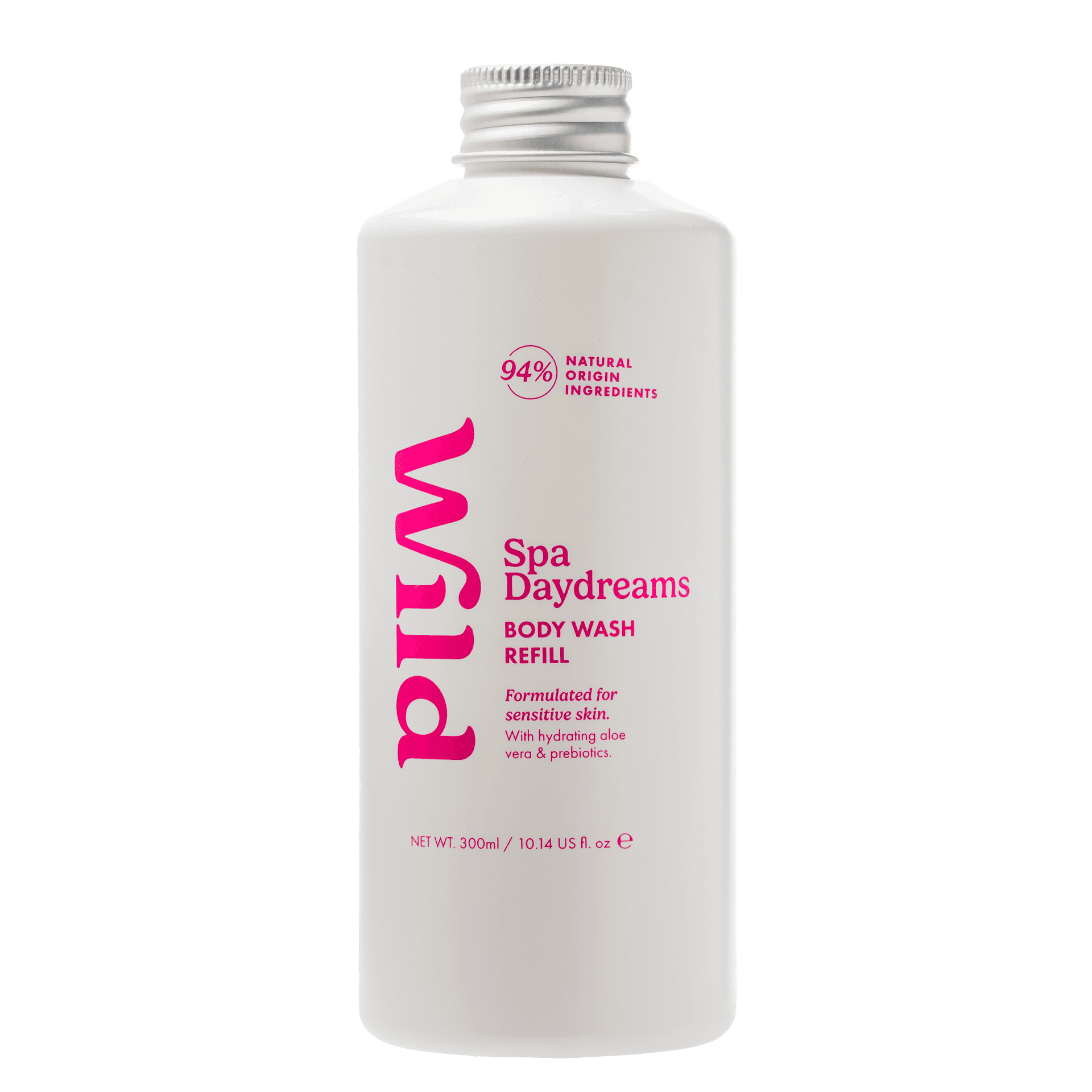
Image alt text: Wild body wash refill bottle made from white Vivomer material, demonstrating plastic-free packaging serving as an everyday consumer product, at scale
Vivomer in the packaging sector
The packaging sector is responsible for the single largest share of plastic waste globally, and current recycling systems fail to cope. Most beauty and personal care packaging is multi-material, or too small to enter recycling streams – meaning it goes straight to landfill. This is no small sector – the UK beauty and personal care industry is one of the largest in Europe, valued at over £10bn annually. The consequences are severe – approximately 11 million tonnes of plastic enter the oceans annually, harming marine ecosystems, and entering our food chain.
Shellworks has built Vivomer to work within existing manufacturing infrastructure. It’s compatible with injection moulding, blow moulding, and extrusion, meaning brands don't need to rebuild their supply chains. The material can be produced in rigid or flexible formats, colour-matched with natural pigments, and finished with screen printing, hot foiling, or debossing to full brand specification). It has already been adopted by leading brands including Wild (stocked at Tesco and Whole Foods), Wildsmith Skin, Haeckels, Abel Fragrance, and Sana Jardin).
To date, Shellworks has shipped over 8 million Vivomer parts, diverting 240 tonnes of conventional plastic from the supply chain. In early 2026, the company raised $15 million in Series A investment - led by Alter Equity, with participation from JamJar (the venture firm founded by the creators of Innocent Drinks) - to scale production across the UK, EU, and US.
GIF:
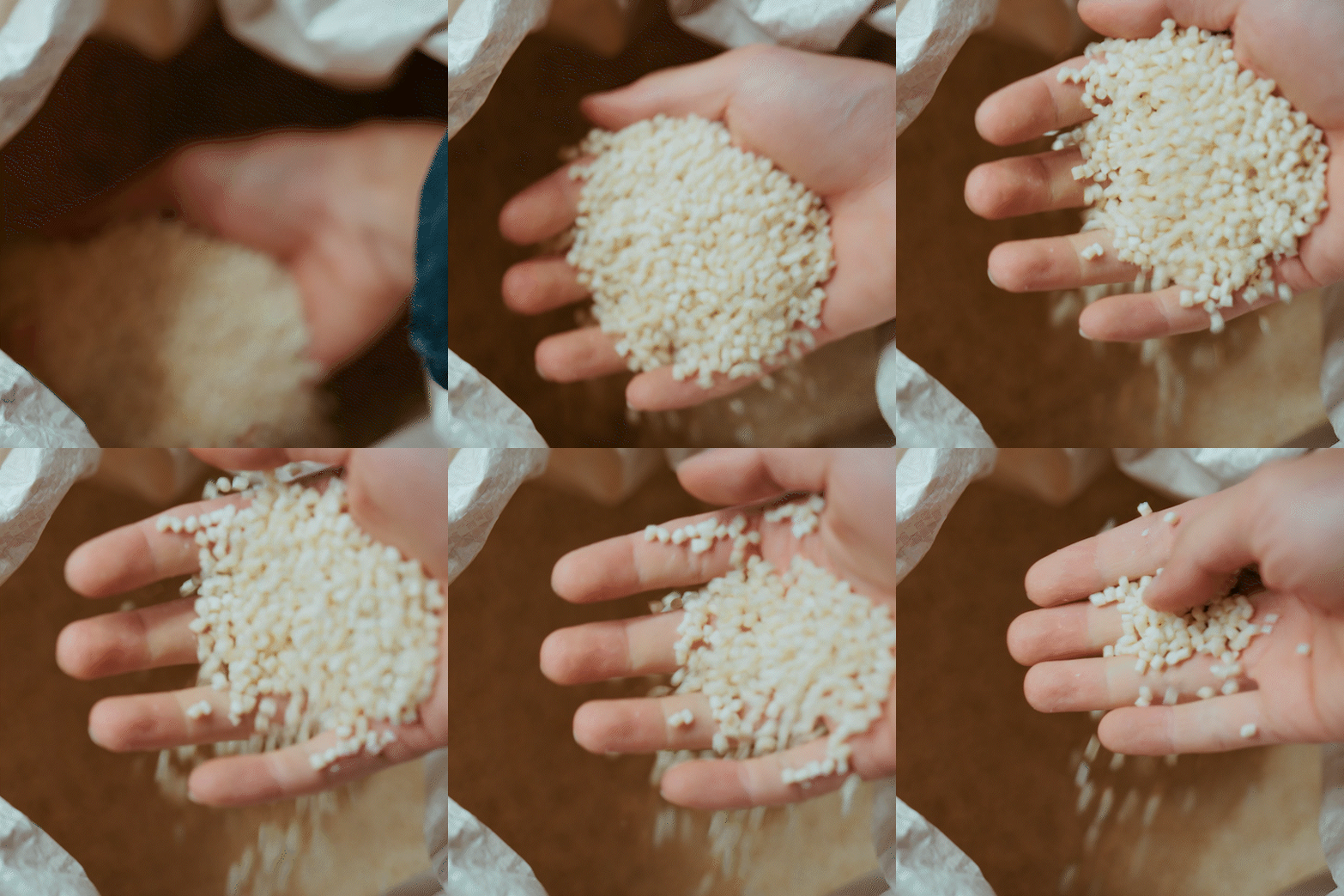
Image alt text: Hand sifting through raw Vivomer pellets extracted from microbes, before the material is shaped using standard plastic manufacturing equipment to form a plastic-free material
Other symbiotic businesses
Vivomer is just one of the examples of symbiotic businesses you can find on the Intrinsic Spring database. If you'd like to learn more about other symbiotic businesses challenging toxic materials, why not read about Made of Air, a company that manufactures a carbon-negative material that replaces MDF boards and thermoplastics. Or, if sustainable packaging in the food and drink spaces interest you, check out BokLok. Also look at INTERFACE sustainable floor coverings who deliver great design, performance, and sustainability – with no compromises!
Relevance
Shellworks is a great example of a symbiotic business. They're actively solving the global plastic crisis by harnessing microorganisms to create Vivomer, a fully compostable, bio-based material. It acts and behaves exactly like plastic - making the transition to it easy and simple.